85 Years of Partnership: How Accounting Has Changed Since 1941
In 1941, Hungerford was founded in Grand Rapids, Michigan as McEwan & Kauffman. The world, and the accounting profession, looked very different than it does today. Financial records were handwritten, calculations were completed manually, and communication moved at the pace of the postal service.
Over the past 85 years, accounting has evolved through economic shifts, technological innovation, changing regulations, and growing client expectations. Through every decade, one thing has remained constant: the importance of trusted financial guidance and strong client relationships.
The 1940s: Building a Foundation
When the firm was founded in the early 1940s, accounting was a highly manual profession. Accountants relied on paper ledgers, adding machines, typewriters, and face-to-face meetings to manage financial records and support businesses.
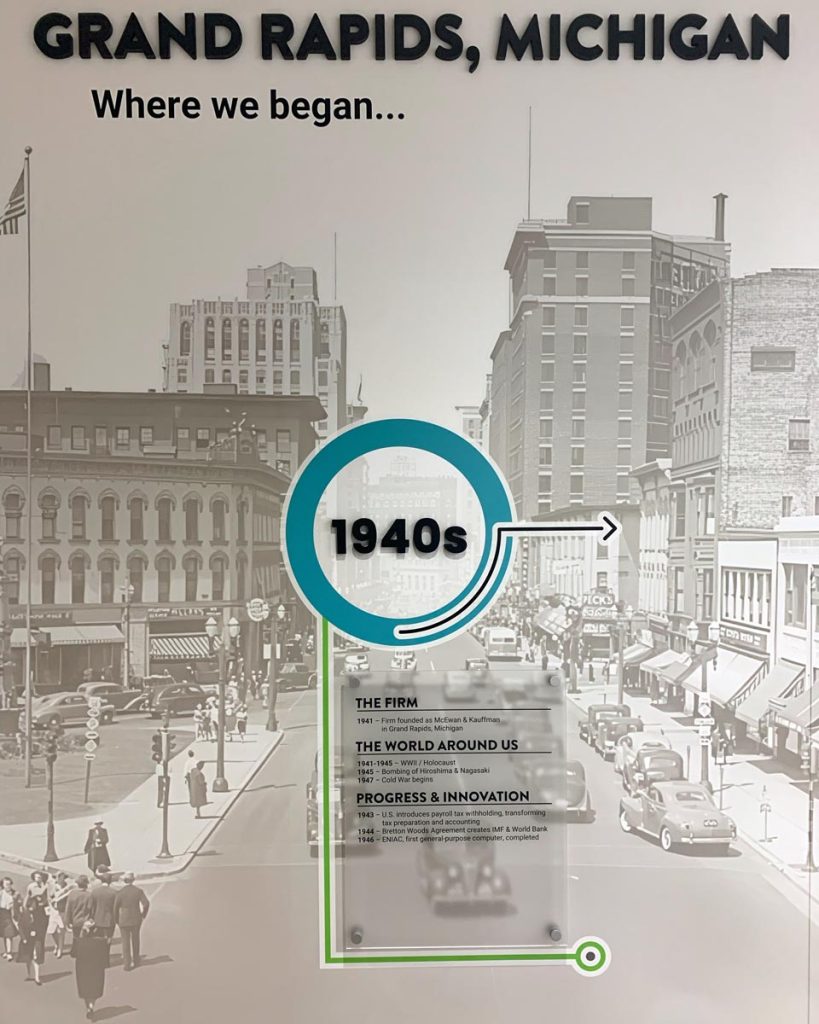
During this decade, major national and global events shaped the future of finance and accounting. One of the most significant developments came in 1943, when the United States introduced payroll tax withholding. This fundamentally changed payroll processing, tax preparation, and employer reporting responsibilities.
In 1944, the Bretton Woods Agreement established the International Monetary Fund (IMF) and World Bank, helping create a more structured global financial system and influencing the future of international accounting and business.
For firms like Hungerford, these changes have reinforced the growing need for experienced financial professionals who could help businesses adapt to evolving requirements.
From Ledgers to Technology
In the decades that followed, the accounting profession experienced enormous transformation.
What once required stacks of paper, handwritten calculations, and physical filing systems gradually shifted toward digital processes and software-driven solutions. Advancements in computers, accounting systems, cloud technology, and automation changed not only how accountants work, but also how quickly and efficiently they could serve clients.
Tasks that once took days could suddenly be completed in hours. Financial reporting became more accurate and accessible. Businesses gained access to better forecasting, planning, and real-time financial insight.
At the same time, accounting professionals expanded their role beyond compliance work. Clients increasingly looked to their advisors for strategic guidance, operational insight, and long-term planning support.
For 85 years, Hungerford has continued to evolve alongside its clients and communities, adapting to changes in the profession while remaining committed to helping businesses and individuals move forward with confidence.
The Evolving Role of the Accountant
Over 85 years, the role of an accountant has transformed from primarily recording historical financial information to helping businesses make proactive, forward-looking decisions.
Today’s accounting professionals help organizations navigate:
- Tax planning and compliance
- Business growth strategies
- Succession planning
- Technology implementation
- Cash flow management
- Regulatory changes
- Risk management
- Long-term financial planning
The profession has become more consultative, collaborative, and relationship-focused than ever before.
A Commitment That Has Remained Constant
While the tools and technology have changed dramatically since 1941, the foundation of the profession remains the same: trust, accuracy, integrity, and partnership.
For 85 years, Hungerford has continued to evolve alongside its clients and communities, adapting to changes in the profession while remaining committed to helping businesses and individuals move forward with confidence.
As accounting continues to change through emerging technology, automation, and new financial challenges, one thing remains clear: strong relationships and trusted guidance will always be at the heart of great accounting.
From handwritten ledgers to modern advisory services, the profession has come a long way since 1941 — and the future continues to bring new opportunities for innovation, insight, and partnership.